Multi-Channel Distribution Strategy for Independent Hotels
Mastering a Balanced Mix
For independent hotels, distribution is a double-edged sword. On one hand, global visibility has never been easier to attain. On the other, the cost of that visibility can quickly erode your profitability.
As a hotel revenue management consulting firm, we see many independent properties fall into the trap of “lazy distribution”—relying on one or two dominant Online Travel Agencies (OTAs) to fill 70% or more of their rooms. While this keeps occupancy numbers steady, it leaves the asset highly vulnerable to algorithm shifts, strips away your control over guest data, and bleeds net revenue through hefty 15% to 25% commission fees.
Mastering multi-channel distribution isn’t about casting the widest net possible and listing your property on every obscure platform. It is about strategic optimization, channel mix control, and managing your cost of acquisition.
Article Summary
1. Decoding the Modern Distribution Landscape
A sophisticated distribution strategy requires categorizing channels not just by the volume they produce, but by their strategic value and transaction cost.
Direct Channels (The High-Margin Foundation)
Examples: Hotel Brand Website, Voice/Phone, Walk-ins.

The Strategic Value: This is your most profitable business. Direct bookings allow you to own the guest data from day one, enabling personalized pre-stay communication and building long-term loyalty.
The Cost: While free of third-party commissions, direct bookings require active investment in technology (a seamless booking engine), SEO, and localized PPC/Metasearch advertising.
Global OTAs (The Volume Drivers)
Examples: Booking.com, Expedia, Agoda.
The Strategic Value: Unmatched global reach and massive marketing budgets. They capture international travelers you could never reach organically and provide a baseline “Billboard Effect” of discovery.
The Cost: High commission rates (15%–25%) and strict rate parity demands.
The Rule: Use them to capture new guests, but ensure your on-property experience converts those guests into direct bookers for their next stay.
Metasearch (The Battleground)
Examples: Google Hotel Ads, TripAdvisor, Trivago.
The Strategic Value: Metasearch sits right at the fork in the road where high-intent shoppers compare prices. By utilizing Pay-Per-Stay (PPS) or Pay-Per-Click (PPC) models, independents can place their direct rate right next to OTA prices.
The Cost: Requires active bid management, but often results in a significantly lower acquisition cost than a standard OTA commission.
Corporate & GDS (The Midweek Stabilizer)
Examples: Amadeus, Sabre.
The Strategic Value: Connects your property directly to corporate travel management companies and consortia. This is vital for driving reliable, higher-yield corporate business during low-demand weekdays.
The Cost: GDS pass-through fees and travel agent commissions, though typically structured as a fixed cost or lower percentage than leisure OTAs.
Wholesalers & Bedbanks (The Volume Baseline)
Examples: Hotelbeds.
The Strategic Value: Great for securing high-volume, static contract blocks well in advance, providing guaranteed base occupancy during low seasons.
The Cost: Heavily discounted net rates and a high risk of “rate leakage” (where wholesalers unbundle package rates and resell them to rogue third-party sites).
2. Shift Focus from RevPAR to Net-RevPAR
The most critical step in mastering your channel mix is changing how you measure success. Traditional revenue management heavily prioritizes RevPAR (Revenue Per Available Room). However, RevPAR treats every dollar of revenue equally, completely ignoring what it cost to get the guest through the door.
To maximize profitability, independent hotels must take Net-RevPAR into consideration in their revenue management strategy, which subtracts all distribution commissions, GDS transactional fees, and direct marketing acquisition costs from the equation.
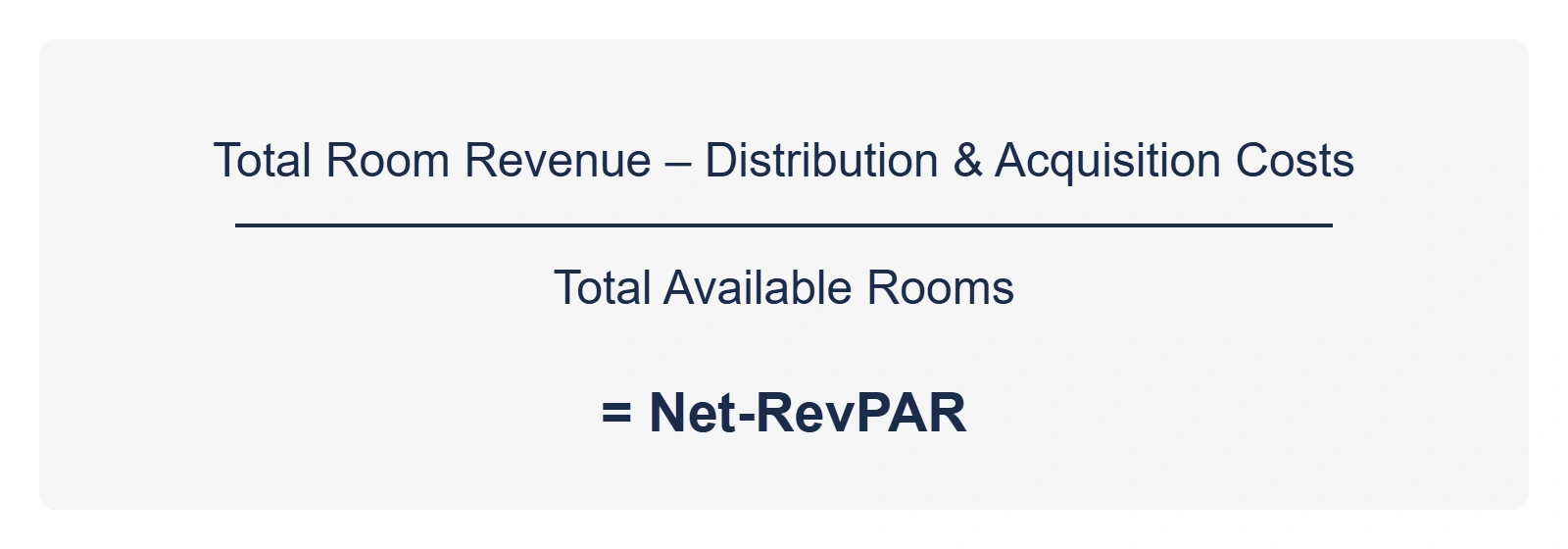
Consider this scenario:
- Channel A (OTA): Sells a room for $200 at a 20% commission. The hotel nets $160.
- Channel B (Direct via Metasearch): Sells the same room for $200. The underlying Google Hotel Ad cost totalled $18 in clicks. The hotel nets $182.
By auditing your channels through a Net-RevPAR lens, you can easily identify which platforms are genuinely contributing to your bottom line and which ones are simply burning margin.
3. Dynamic Inventory Management: Faucets and Valves
A masterful multi-channel strategy is dynamic. Your channel mix should change based on your booking horizon, seasonality, and compressed demand dates. Think of your distribution channels as a series of faucets and valves.
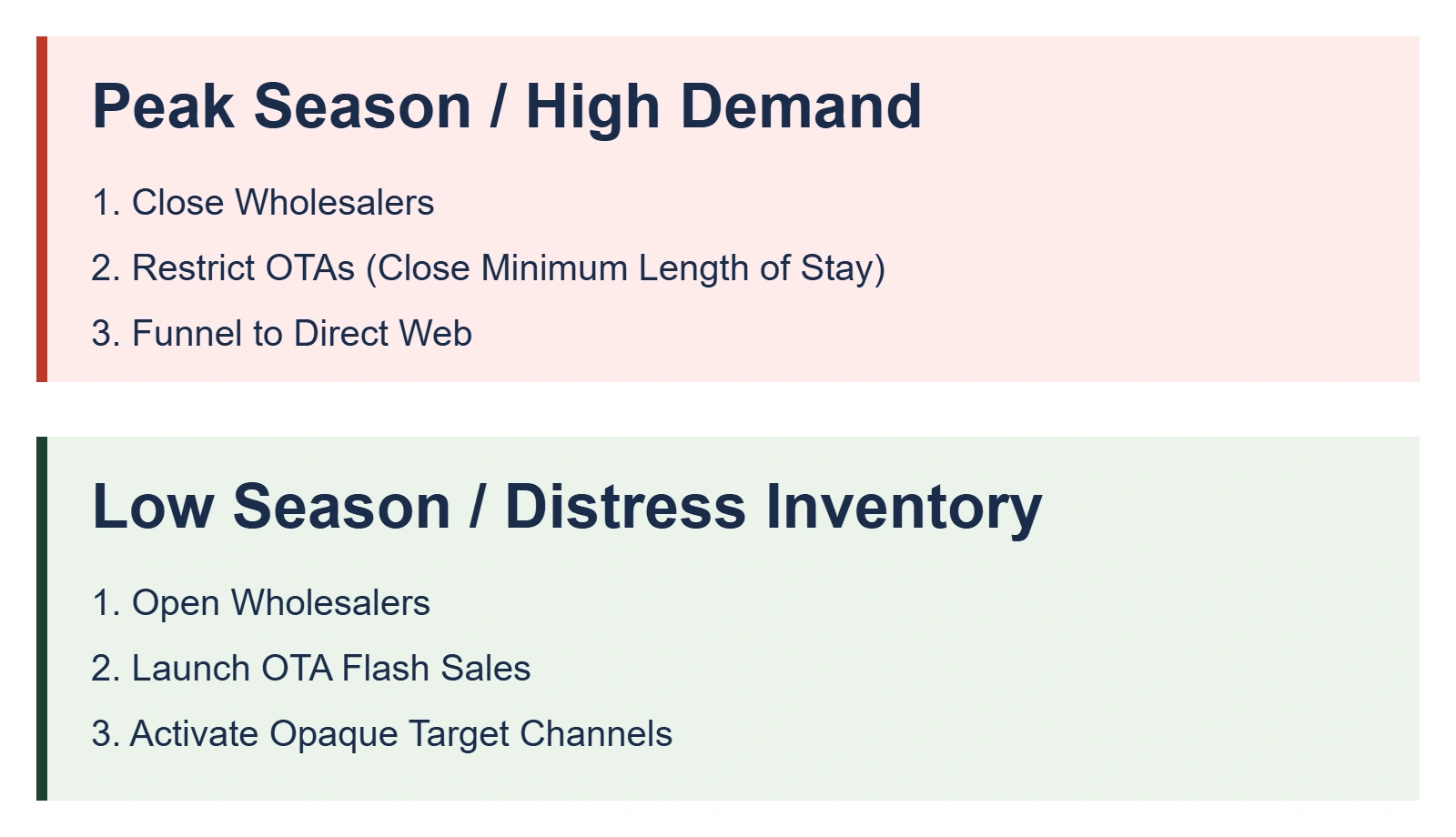
The High-Demand Strategy: When a major city event, conference, or peak weekend approaches, you do not need the help of high-commission OTAs to fill rooms. You should “turn off the valve” by implementing strict controls: close out wholesale allocations, raise OTA rates to the absolute limit of parity, or introduce Minimum Length of Stay (MLOS) restrictions. Force the remaining compressed demand into your direct booking engine.
The Low-Demand Strategy: When occupancy pacing is slow, open the valves. Leverage localized OTA promotions, participate in opaque member-only programs, and open up wholesale capacity to secure a baseline occupancy that covers your fixed operational costs.
Uncover the hidden revenue potential
of your hotel or resort.
4. Defending Against Rate Leakage
The greatest threat to an independent hotel’s multi-channel harmony is rate leakage. This occurs when wholesalers break contract terms and pass your heavily discounted static rates to non-contracted, secondary OTAs. These rogue sites then undercut your direct website publicly, destroying your price integrity and tanking your direct conversion rates.
To combat this, independent hoteliers must enforce strict distribution hygiene:
- Switch to Dynamic Wholesale Pricing: Move away from static contracted net rates and transition your wholesale partners to dynamic, BAR-based (Best Available Rate) connectivity via your Channel Manager.
- Execute Regular Audits: Run routine test bookings on obscure third-party sites that are undercutting you. Trace the reservation back through your PMS to identify which wholesaler leaked the inventory, and enforce financial penalties or shut off their feed entirely.
5. The Ultimate Objective: The Balanced Mix
There is no universal, magic percentage split for the perfect distribution mix. A remote luxury resort will look drastically different from a city-center boutique hotel. However, a healthy, resilient independent hotel should generally aim for a balanced, diversified ecosystem:
- 35% – 45% Direct (Website, Voice, Corporate Direct)
- 35% – 40% Global OTAs (Managed via strict yield controls)
- 10% – 15% Corporate / GDS (Securing the midweek base)
- 5% – 10% Niche, Metasearch, and Dynamic Wholesale
By proactively managing this mix rather than letting the market dictate it for you, you protect your independence, gain total ownership over your guest relationships, and ensure that your top-line revenue growth translates directly into bottom-line asset value.
Cheers,
Remko West
PS. Any doubts or uncertainties about how to tackle next year? Contact us for our revenue management consulting or hotel consulting services to help build a solid plan to outperform your competition.

More Free Resources
Top 10 Popular Posts
Share This Story, Choose Your Platform!

About the Author:
As COO and Co-Founder of XOTELS, Remko West has made it his mission to turn hotels and resorts into local market leaders. XOTELS´ diverse expertise and deep-knowledge across revenue management consulting, hotel management, and hotel consulting, enables us to drive results for independent boutique hotels, luxury resorts, and innovative lodging concepts.